Why data centres are hitting limits, and what parked cars can offer
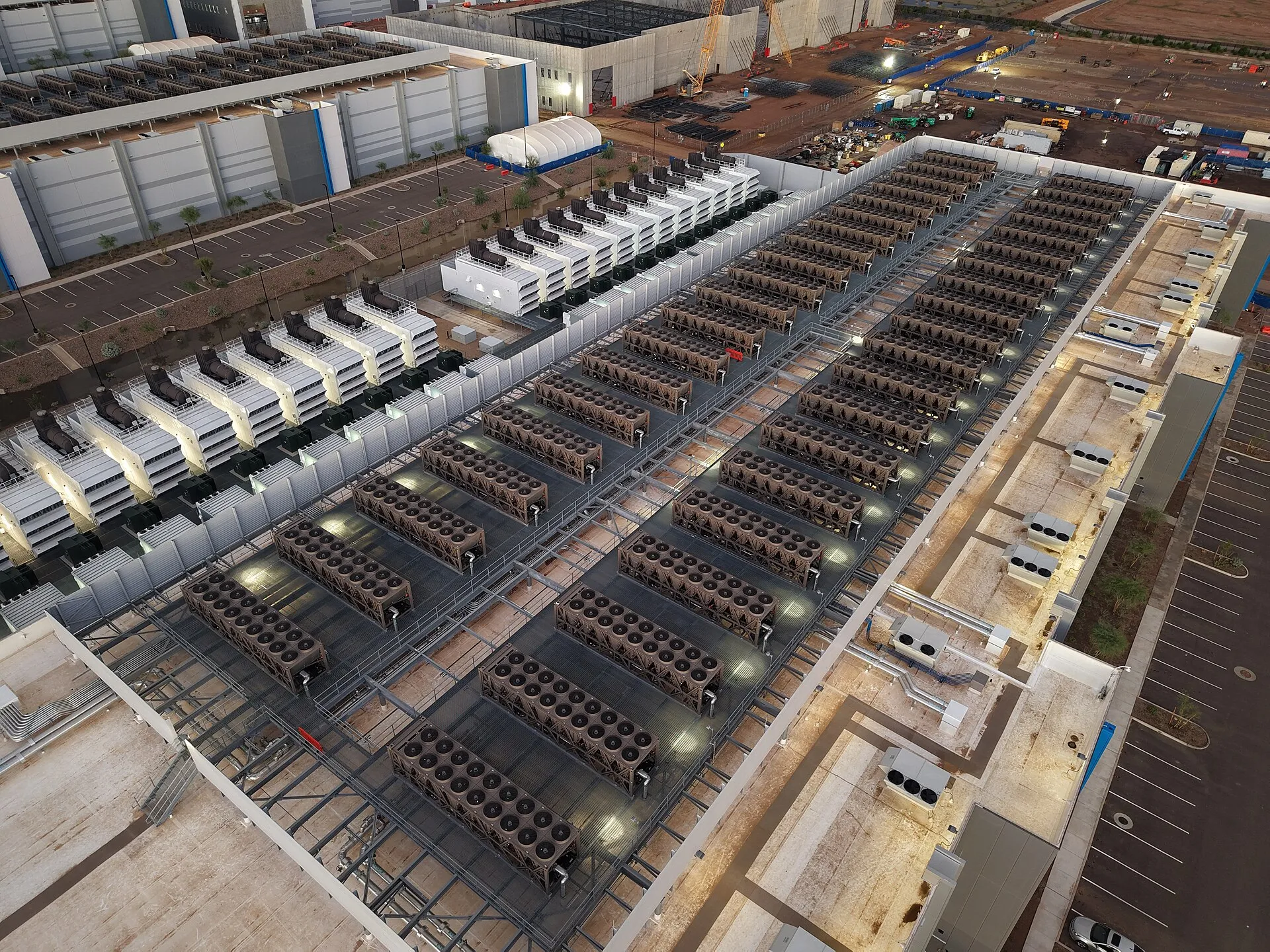
Artificial intelligence runs on electricity. The International Energy Agency expects data centres worldwide to use about 945 TWh in 2030, more than Japan uses today. In one McKinsey scenario, data centres in the United States alone reach nearly 12% of national power demand by the end of the decade.
In Europe, that growth is meeting physical limits.
Three places where the limits show
Ireland. Data centres used 23% of all metered electricity in Ireland in 2025, up from 5% a decade earlier. Concerned about security of supply, the regulator effectively paused new grid connections in the Dublin area from 2021. The pause ended in December 2025, but with new conditions: a new data centre must bring generation or storage capacity matching its grid connection, and cover at least 80% of its yearly demand with additional renewable electricity in Ireland.
Amsterdam. The region has restricted new data centres since 2019, citing pressure on the grid and on land. Local opposition remains strong: a campaign against one large planned site points out that it would need up to 1.1 billion litres of water a year once complete.
Frankfurt. One of Europe's main data-centre hubs has a different problem. In its central data-centre area, grid capacity is so constrained that significant upgrades are not expected until the 2030s.
What regulators are starting to ask for
Read the Irish conditions again: bring your own storage, and run on new clean power. Policymakers are no longer only asking how much electricity data centres use, but whether they can be flexible, carry their own storage and follow renewable generation.
What parked electric cars already have
An electric car parked at home or at a depot already combines a large battery and a powerful AI computer, and it is often plugged in for hours, sometimes under a solar roof. Europe's stationary battery fleet is expected to grow almost fivefold by 2030, and electric cars add storage on top of it.
That makes a fleet of parked cars, in principle, a kind of distributed computing resource that:
- comes with its own storage, so work can be shifted to the hours when clean power is plentiful;
- sits close to local solar, which is often worth little when exported to the grid;
- needs no new building, cooling plant or water; and
- is spread across thousands of locations instead of concentrated on one stretched grid connection.
Where the comparison stops
This is not a replacement for data centres. Training the largest AI models needs thousands of tightly connected processors with enormous memory and network bandwidth, which cars do not have. A car's computer also has to stop the moment its driver needs the car, so it suits work that can wait: batch processing, data preparation and similar jobs.
The economics are also still unproven. How much power a parked car draws while its computer works is the single most important number, and it has not yet been measured on production vehicles. Safety, cybersecurity and warranty questions belong to the carmakers, who must stay in control of their vehicles.
A complement worth exploring
Data centres will keep growing, and they will keep running into grids, land and water. Parked electric cars can take on part of the work that can wait, using storage and clean power that already exist. Worked out together with carmakers, energy providers and regulators, that is a complement worth exploring.